
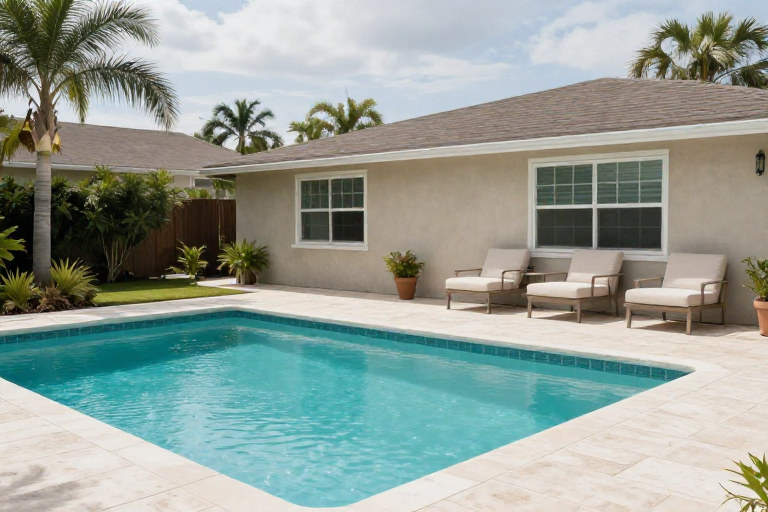
Pool layout planning starts with a simple question: how do you want to spend time in your backyard? A pool can be the focus of an outdoor space, but the surrounding seating, views and routes through the yard also shape how that space feels. Before collecting design ideas, think about the moments you want the backyard to support.
For homeowners in West Melbourne and Brevard County, a useful first step is to write down those priorities. You do not need a finished drawing. A short description of your household's routines can give a design conversation a clearer starting point.
Start with the activities that matter to you
Picture an ordinary afternoon at home. Do you imagine a quiet place to sit near the water, room to gather with friends, or a backyard that connects several different activities? Your answers can help you explain what you want from the overall layout.
Make separate lists of essentials and optional ideas. For example, a comfortable place for conversation may matter more to you than a particular pool shape. Someone else may place a stronger emphasis on the view from an indoor living area. Neither priority needs to become a final design decision at this stage.
Include everyone who regularly uses the backyard in the discussion. Record where their preferences overlap and where they differ. Then bring those observations to the designer rather than trying to fit every idea into a sketch yourself.
Consider seating and movement during pool layout planning
Think about the places people already use outside. A patio table, a covered sitting area or a favorite spot near the house may provide useful context for the proposed pool layout. Note which of those spaces you would like to keep and which you would like to reconsider.
Also describe how people move between them. Where do you usually step outside? Which routes connect the house, seating areas and other parts of the yard? These are observations to share, not measurements that establish whether a proposed plan is suitable.
Avoid judging a concept only by the outline of the water. Ask how the complete arrangement would support conversation, everyday access and your preferred activities. Let the project professionals evaluate the site's constraints and the detailed design requirements.
Look at the backyard from inside the house
The pool may be visible from rooms you use throughout the day. Take a few photographs from those windows or doors and note what catches your eye. A view from a kitchen window can feel quite different from a view at the patio entrance.
Consider whether you prefer an open view across the yard or a pool that forms part of a broader outdoor composition. You can also identify existing landscape features you enjoy. These preferences help explain the feeling you want without dictating a specific construction solution.
When browsing the All American Pools gallery, save a small selection of examples and describe the visible detail you like in each. A photograph can communicate an idea, but it does not establish that the same arrangement will suit your property.
Observe sunny and shaded gathering spots
Spend some time noticing how you currently use the yard at different times of day. Where do you choose to sit? Which areas feel inviting for a morning conversation or an evening gathering? Record your own observations rather than assuming a photograph shows the conditions at your home.
Tell the designer which experiences you would like the layout to support. You might prefer seating near an existing covered area, a clearer connection to an outdoor dining space, or a view that remains part of the conversation from several locations.
These preferences should be considered alongside the site's actual conditions. An early concept is a way to discuss possibilities. It should not be treated as confirmation that every feature, orientation or arrangement is appropriate for the property.
Bring clear questions to the design conversation
Organize your notes into a short brief: your main activities, the spaces you want to retain, the views you value and the ideas you are still exploring. Existing photographs can help the conversation stay connected to your actual backyard.
Useful questions include:
- How could the overall layout reflect our everyday routines?
- What information about our property would help you evaluate these ideas?
- How would the proposed seating areas relate to the house and pool?
- Which parts of the concept need further assessment before decisions are made?
- What alternatives could meet the same priorities?
You can also review the company's frequently asked questions and bring any unanswered questions to the discussion.
The goal of this preparation is clarity. Explain how you want to enjoy the backyard, remain open to alternatives, and ask the project professionals to assess the details. A useful pool layout conversation begins with your priorities and the real characteristics of your property.
Recent Comments